MWAC Commercial Sanitation
Your operation needs consistent cleaning schedules tailored to unique hazards, processing volumes, allergen management, and inspection schedules, with auditable records validating food safety measures, compliance audits, and health department standards. The details below give guidance on sanitation program requirements.
Key Takeaways
- Brampton's food safety cleaning technicians clean for restaurants, grocery departments, commissaries, warehouses, bakeries, schools, mobile vendors, and allergen-sensitive operations.
- Cross-contamination elimination is maintained by sanitizing high-touch surfaces, food-contact equipment, kitchens, floors, drains, restrooms, and storage areas with zone-based workflows.
- Logging of conclusion through checks, assessments, and remedial documentation verifies certified specialists have confirmed proper chemical concentration, appropriateness, and exposure duration.
- Sanitation timelines should comply with danger, production volume, format changes, releases, and regulations, with everyday, recurring, and annual activities allocated by zone.
- Opt for vendors with hazard analysis knowledge, health regulatory, understanding, safety training, training, insurance, testimonials, colour-coded implements, and assessment-ready hygiene documentation.
Food Safety Cleaning Requirements for Brampton Operations
Food safety cleaning is required for any Brampton facility that deals with, keeps, prepares, packages, or provides food. Apply it to your business if it falls within health oversight, food standards, or HACCP systems. This includes food service venues, employee dining, supply facilities, retail sections, butcheries, seafood counters, retail shops, and facility kitchens.
You'll equally need documented food sanitation in supply facilities, manufacturing operations, cold storage warehouses, bakeries, school food programs, reception halls, and delivery services. Portable business models matter as well, examples being food trucks, festival vendors, and pop-up establishments. If your team work with ingredients, section ready-to-serve foods, heat meals, or keep allergens stored, your establishment requires established hygiene documentation. In Brampton, hygiene stays required; it forms legal, operational, and consumer protection compliance.
What Services Do Brampton Cleaning Experts Provide?
You need professional cleaners who sanitize high-touch surfaces, kitchens, floors, and restrooms to comply with food safety and health regulations. They focus on these spaces because they pose the greatest danger for cross-contamination, slipping risks, and sanitation breaches.
Knowing their service areas allows you to confirm your operation's sanitation satisfies operational demands and regulatory compliance.
High-Touch Surface Sterilization
assign how regularly each area is sterilized
via replacing towels, using directional systems, and dividing cleaning materials separate according to location
Food Prep Areas, Flooring, and Sanitary Facilities
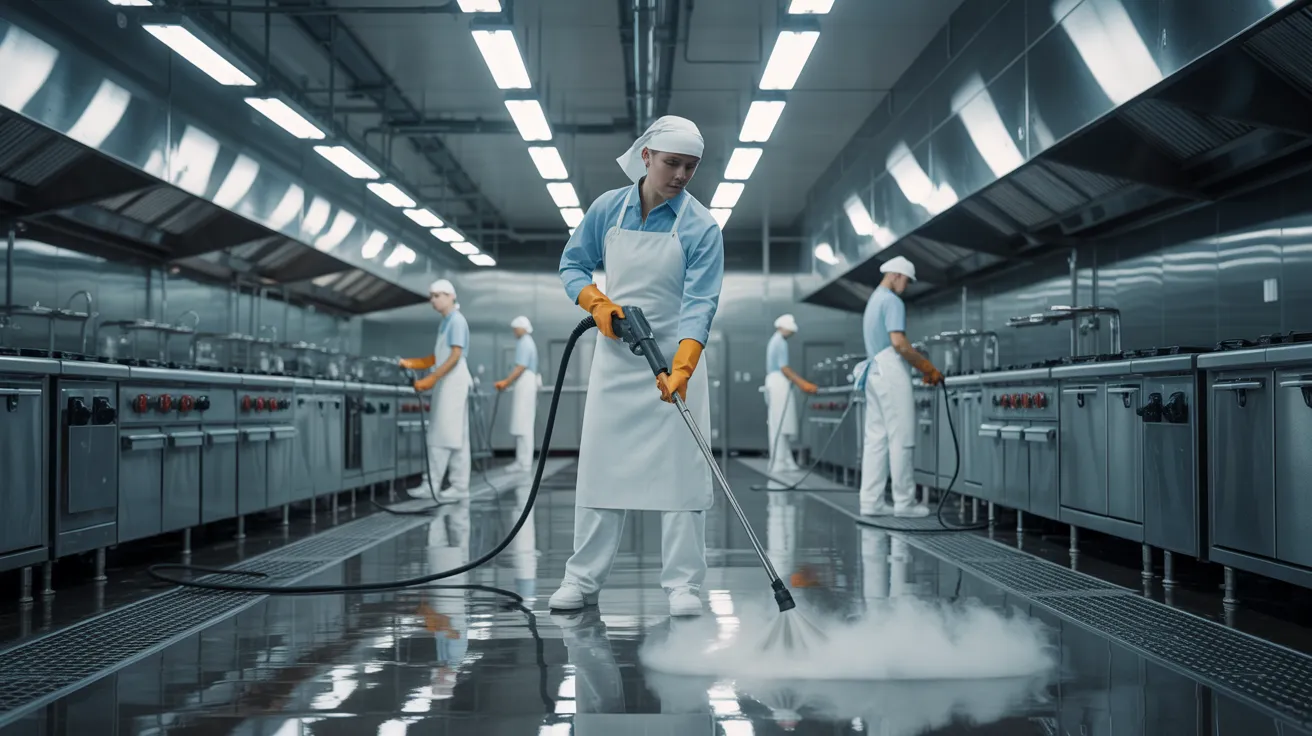
Expect Brampton cleaning experts to focus on kitchens, floors, and restrooms because each area carries distinct food safety, slip-and-fall, and public health risks. In industrial kitchens, you need degreasing on cook lines, equipment exteriors, drains, prep surfaces, and splash zones to minimize contamination and pest pressure.
You should also expect documented floor care. is likewise provided as part of the service.
In restrooms, cleaners treat touchpoints, fixtures, partitions, dispensers, and waste containers then refill supplies and eliminate odor. They also service restaurant moprooms, where chemical storage, sink hygiene, and drainage conditions can affect sanitation compliance and staff safety daily.
Why Food Safety Cleaning Matters in Brampton
To comply with regulatory mandates and pass inspections, Brampton establishments must follow food-safe cleaning standards. You also reduce cross-contamination by cleaning and sanitizing food-contact surfaces, equipment, and high-touch areas correctly. Most importantly, you help protect public health by lowering the risk of foodborne illness in your facility.
Regulatory Code Requirements
Brampton food companies must comply with mandatory safety protocols, so food safety cleaning is critical to fulfilling health codes, ensuring the safety of customers, and avoiding penalties. You must maintain hygienic food handling zones, verifiable cleaning logs, proper chemical use, and verifiable staff procedures that correspond to municipal and provincial inspection expectations.
Preserving well-maintained cleaning files establishes due diligence for inspection audits and establishes that your practices are standardized, reproducible, and documented.
Cross-Contamination Management
Meeting health code standards also depends on your capacity to stop cross-contamination during daily food handling and cleaning. You must keep raw items away from prepared dishes, clean work areas after each use, and store chemicals away from food-contact items. Established guidelines minimize contamination chances and support consistent compliance during inspections.
You might establish allergen separation to stop main allergens from reaching shared surfaces, containers, or equipment. Apply separate boards, color-marked equipment, and strict utensil labeling so staff don't mix items during preparation or service. Mandate handwashing after handling uncooked meat, fish, egg products, or allergens. Swap cleaning rags frequently, and check sanitizer strength with test strips. When employees learn these procedures every shift, you develop a more sanitary, secure business that meets Brampton's food safety expectations every day.
Public Health Protection
When food safety cleaning fails, you don't just risk a failed inspection—you increase the chance of food-related sickness affecting customers, staff, and the wider Brampton community. You also weaken your role in safeguarding community wellness, especially in busy food facilities where pathogens travel quickly through surfaces, equipment, and touchpoints.
You need cleaning protocols that eliminate contaminants, disinfect properly, and confirm effectiveness. That requires adhering to exposure periods, employing authorized sanitizers, recording cleaning times, and educating employees to meet regulatory standards. These measures facilitate disease prevention by lowering microbial loads before they reach food or hands. In Brampton, rigorous cleaning shields at-risk groups, prevents disease spread, and helps you demonstrate proper care. When you maintain proper standards, you don't just meet regulations—you substantially decrease danger and promote secure food handling throughout the region.
Why Is Cleaning Essential for Food Safety Compliance?
Committing to comprehensive cleaning schedules underpins food safety compliance by reducing contamination risks, controlling pathogen growth, and maintaining your facility's adherence to sanitation requirements under HACCP-based programs and public health regulations. You validate that contact surfaces remain visibly clean and microbiologically controlled, supporting documented preventive controls and inspection readiness.
Strategic cleaning practices also reinforce allergen prevention by extracting residues that can lead to undeclared allergen exposure.
What's the Ideal Time to Arrange Commercial Cleaning?
Create cleaning plans based on risk assessment, output volume, and regulatory standards instead of relying solely on a set calendar. You should plan routine cleaning every day
weekly plans for drains, ventilation systems, storage racks, and difficult-to-access areas, according to inspection findings and sanitation records.
How Do You Choose Brampton Cleaning Experts?
Screen providers initially by their food-safe sanitation requirements—not budget alone. You need to verify that every company meets CFIA, public health, and HACCP-aligned expectations for your operation. Demand proof of insurance, WHMIS compliance, training records, and management systems. Evaluate technician knowledge of cross-contamination risks, chemical safety, and documented sanitation practices.
You should further examine service consistency and answerability. Request testimonials from Brampton food businesses, then review reply speed, corrective action plans, and communication standards. Validate the company supports supplier audits view this and can supply compliance documentation to authorities or external parties. Confirm equipment is maintained, colour-coded tools are used appropriately, and facility-specific risks are identified. A qualified provider ensures regulatory compliance, product integrity, and your brand reputation.
Which elements are contained in a Food Safety Cleaning Plan?
Create a documented strategy that clarifies every sanitation responsibility, standard, and task before production begins. You should outline cleaning schedules, authorized chemicals, concentration levels, contact duration, implements, and validation techniques for each location, surface, and apparatus. Incorporate pre-operational inspections, corrective actions, and employee training requirements.
Your strategy should also address cross-contamination controls, waste handling, pest-prevention measures, and documented schedules for facilities, drains, flooring, and food-preparation surfaces. Outline how you'll separate raw and ready-to-eat processes, facilitate ingredient tracking, and keep accurate allergen labeling through validated cleaning between product changes. You should assign accountability, keep signed records, and assess results against regulatory standards, HACCP controls, and customer requirements. When gaps appear, modify procedures immediately and retrain staff.
Popular Inquired Inquiries
Can cleaning services accommodate nighttime operations in Brampton properties?
Yes, you can book cleaning services to support nighttime operations in Brampton facilities. You'll coordinate nighttime cleaning around production schedules, access controls, and staffing requirements. Services generally map overnight logistics to reduce disruption, maintain standards, and document completed tasks. You should verify response times, management, lockout procedures, and waste handling before beginning service. If you operate regulated spaces, you'll also need documentation that enable audits and compliance verification.
Can sanitation professionals manage emergency spill response?
Yes, you can find Brampton cleaning experts to offer hazard containment services. They manage hazardous materials, assess risks, contain contamination, and begin swift cleanup to minimize risk and business interruption. You should verify arrival timeframes, training certifications, PPE protocols, and disposal procedures. If your facility must meet health or food safety regulations, select a service that records events, follows compliant sanitation standards, and enables compliance verification.
Are environmentally safe disinfectants suitable for food-handling equipment?
Definitely, eco-friendly disinfectants perform safely on surfaces contacting food if you select items marked food-safe that meet regulatory compliant. You ought to validate application timing, concentration levels, and rinse protocols before use. Natural-based solutions reduce chemical burden, but you should obtain confirmation of performance against relevant pathogens. To ensure residue free surfaces, adhere to manufacturer instructions exactly and validate your cleaning agent meets food industry regulations.
Will cleaning schedules adjust for seasonal shifts?
Yes, you can tailor cleaning schedules for seasonal production changes. You should modify frequencies, staffing, disinfectants, and testing procedures to fit seasonal workflows while upholding regulatory requirements. You'll lower operational delays by scheduling cleaning around production shifts, high demand periods, and equipment use patterns. You should additionally revise procedural documents, instruction programs, and facility monitoring to reflect temporary risks, new allergens, or higher contamination levels. Regular reviews keep your schedule effective.
Do commercial cleaning providers instruct your team in sanitation best practices?
Indeed, commercial cleaning providers often offer staff training on sanitation best practices. Your staff receives training on safe chemical application, contact times, cross-contamination prevention, equipment disassembly, and record-keeping. They generally adhere to instruction with HACCP, GMP, and CFIA or regional health standards requirements. Many perform sanitation audits to verify compliance, identify gaps, and strengthen improvement measures. This supports you in maintain consistent procedures, pass inspections, and decrease foodborne illness risks on a daily basis.
Final Thoughts
By collaborating with Brampton commercial cleaning and food safety experts, you aren't simply tidying—you keep your operation inspection-ready and your standards up to code. From production areas to kitchen zones, every clean surface and organized space reduces pest risk and avoids expensive losses. By arranging service at appropriate intervals and adhering to a systematic cleaning protocol, you protect staff members, customers, and your credibility. In a strictly regulated industry, clean spaces are mandatory—they're key to business compliance.